Do You Have Lower Back Pain and Pelvic Floor Dysfunction?
By NuvoPhysio · Updated June 2, 2026
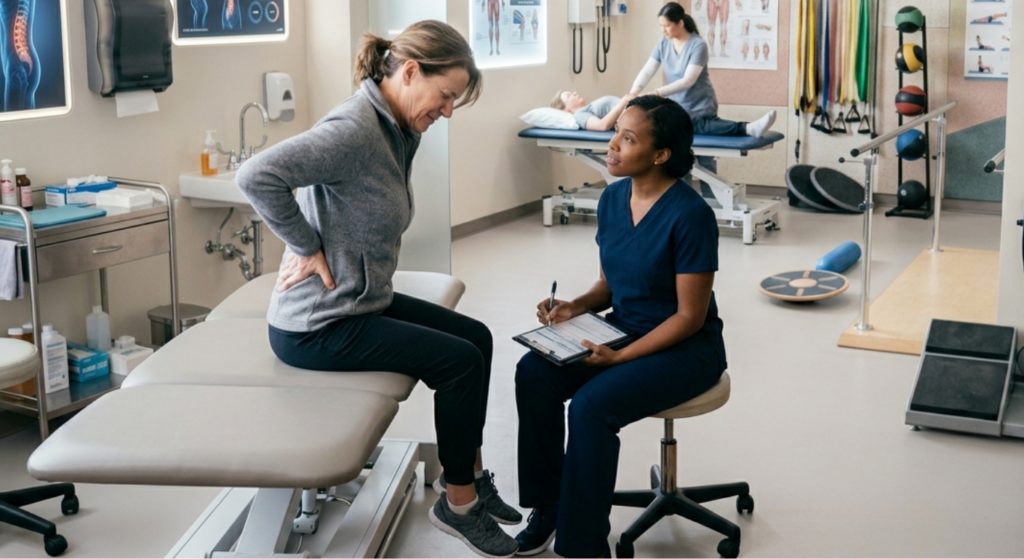
Lower back pain is one of the most common complaints we see, and one of the most misunderstood. If your back has been aching for weeks or months and nothing seems to fully settle it, there may be a piece of the puzzle that has gone unexamined: your pelvic floor. At Nuvo Physio, our pelvic-health physiotherapists routinely find that low back pain and pelvic floor dysfunction travel together, and that treating one often unlocks progress in the other.
In this guide we explain why these two areas are so closely linked, why the usual advice to “just do some Kegels” can backfire, and what a thorough assessment actually involves. Our goal is simple: to help you understand your body and get care that targets the real source of your symptoms.
Why low back pain is so common
Low back pain is remarkably widespread. Research suggests that up to roughly 84% of adults will experience it at some point, and it remains a leading reason for primary-care visits and one of the top causes of disability worldwide. Those numbers are expected to keep climbing as populations age and sit more, which places a growing burden on the health system and on the people living with daily discomfort.
Because back pain is so prevalent, a great deal of research is devoted to understanding its causes, identifying risk factors, and building evidence-based guidelines for assessment and treatment. One of the most interesting and fast-growing areas of that research looks at the relationship between low back pain and pelvic floor dysfunction.
What the pelvic floor actually does
The pelvic floor is the group of muscles and connective tissue slung across the base of the pelvis, like a supportive hammock. It is far more than a single muscle you squeeze. Its core jobs include:
- Support: holding up the bladder, the reproductive organs, and the vaginal and rectal walls.
- Continence: keeping urine and stool in until you choose to release them.
- Sexual function: contributing to sensation, arousal, and orgasm.
- Circulation: assisting venous and lymphatic return from the pelvis.
- Stability: stabilizing the pelvis and spine during movement.
That last point is key. The pelvic floor is part of your deep core, working alongside the diaphragm, the deep abdominals, and the small muscles of the spine. Together they generate the intra-abdominal pressure your body needs to move, lift, and absorb load. When this system is not coordinating well, the low back can end up overworking to compensate. If you want a broader overview of how these muscles function, our companion article on things every woman should know about the pelvic floor is a helpful starting point.
The link between back pain and pelvic floor dysfunction
Pelvic floor dysfunction is not a single problem. It can show up as weakness, poor endurance, or, just as often, as tension, stiffness, and overactivity. Each of these presentations behaves differently and needs a different plan.
Urinary incontinence, the involuntary leakage of urine, is the most familiar form of pelvic floor dysfunction. Canadian data suggest it can affect roughly 1 in 10 Canadians and about 1 in 5 women. Many people simply live with it, unaware that conservative treatment like pelvic floor physiotherapy can meaningfully improve or resolve it. If leakage is part of your picture, our page on urinary incontinence and bladder control explains the options.
Several studies have connected low back pain with pelvic floor dysfunction, and the overlap is striking: in one body of research, around 78% of women with low back pain also reported urinary incontinence. Yet despite this relationship, many clinicians never examine or even consider the pelvic floor when managing back pain. When pelvic advice is offered, it is often a quick “try some Kegels” and nothing more.
Why “just do Kegels” is often the wrong advice
Here is the problem with that one-size-fits-all advice. Weak pelvic floor muscles do frequently lead to urinary leakage or pelvic organ prolapse, the descent of pelvic organs into the vaginal canal. But tight, overactive muscles can cause their own set of issues, including certain forms of incontinence, sexual dysfunction, and various chronic pelvic pain syndromes.
If your dysfunction is driven by muscles that are already too tight, Kegels will not help, and they may make things worse. Tightening a muscle that cannot fully relax only deepens the tension. Adding to the difficulty, research has shown that around a quarter of women given brief verbal instruction for Kegels performed the contraction in a way that could actually promote incontinence rather than prevent it. In other words, even when strengthening is appropriate, technique matters enormously, and that is hard to get right without skilled, hands-on guidance.
Why a proper assessment matters
One reason pelvic floor dysfunction is so often mishandled comes down to how it has been studied. Much of the older research relied on questionnaires, which capture symptoms but cannot tell whether the underlying muscles are weak, tight, or overactive. As a result, very different problems get lumped together, and treatments end up being recommended without knowing what is actually happening at the muscle level.
This is exactly why we love a Canadian study that examined the physical characteristics of the pelvic floor in women referred to physiotherapy for lumbopelvic pain. Importantly, these women were not seeking care for pelvic symptoms; they came in for back and pelvic pain. Trained pelvic-health physiotherapists performed an internal digital examination to distinguish between two very different findings: pelvic floor weakness and pelvic floor tenderness.
The results were eye-opening. Around 95% of the women with lumbopelvic pain showed signs of pelvic floor dysfunction. About 71% had tenderness on internal palpation, a sign of an overactive muscle. Roughly 66% showed pelvic floor weakness, and about 41% had a prolapse. Functionally, overactive pelvic floors were more strongly linked to disability than weak ones. Given how often women with back pain are told to do Kegels, these findings show how easily the wrong approach can be prescribed when no one looks closely.
What an internal exam tells us
A digital (gloved-finger) internal assessment is the key tool that questionnaires cannot replace. It lets a trained physiotherapist feel whether the muscles can contract, relax, and let go, where there is tension or tenderness, and how the pelvic floor coordinates with your breath and deep core. Better screening leads to better information, and better information leads to better, more targeted care for everyone.
How we approach it at Nuvo Physio
At Nuvo Physio, we never assume your back pain is purely a spine problem or purely a pelvic problem. We take time to understand your full history and, with your consent, assess both the lumbar spine and the pelvic floor so we can identify the true source of your symptoms.
From there, your plan is built around what we actually find. For an overactive, tight pelvic floor that might mean down-training, breath work, manual therapy, and learning to release rather than clench. For genuine weakness it might mean carefully coached strengthening and coordination. For prolapse or leakage it might mean a graded program that restores support and confidence. Whatever the picture, the aim is the same: care that fits your body, supports your spine, and helps you move without fear. Athletes and active people, in particular, often benefit from this dual lens, which we explore further on our athletic pelvic health page.
If you have been struggling with stubborn low back pain, or you suspect your pelvic floor is part of the story, you do not have to keep guessing. Book an assessment with our team and let us help you find the real source and a clear path forward.
Frequently asked questions
Can pelvic floor dysfunction really cause low back pain?
The two are closely connected. The pelvic floor is part of your deep core, helping stabilize the pelvis and spine. When it is too weak, too tight, or poorly coordinated, the low back often compensates, which can contribute to pain. Studies consistently show a high overlap between lumbopelvic pain and pelvic floor dysfunction.
Should I just do Kegels for my back and bladder symptoms?
Not necessarily. Kegels only help when the issue is genuine weakness and the technique is correct. If your pelvic floor is already tight and overactive, Kegels can make symptoms worse. That is why an individual assessment is so important before starting any exercise program.
What happens during a pelvic floor assessment?
After discussing your history and goals, your physiotherapist may, with your consent, perform an internal digital examination to assess whether your muscles can contract, relax, and coordinate properly, and to check for tenderness or prolapse. Everything is explained in advance, and you remain in control throughout.
How long until I notice improvement?
It varies with the cause and how long symptoms have been present. Many people notice meaningful change within several weeks of consistent, targeted treatment. Because every body is different, your physiotherapist will set realistic milestones with you and adjust the plan as you progress.
Do I need a doctor’s referral to see a pelvic floor physiotherapist?
In most cases you can book directly without a referral. If you are unsure or have a complex medical history, our team is happy to guide you. The most important step is simply reaching out so we can assess what is really going on.
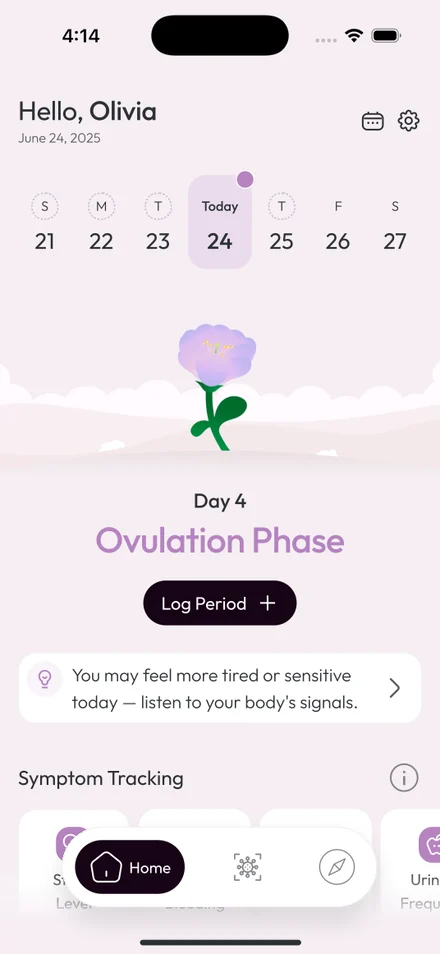
Your care doesn’t stop at the clinic door.
Nuvo Physio runs on Elle Santé — the women’s health platform we built right here. Your plan, your progress and your care team stay with you between visits, not just in the room.
Early access · iPhone and Android