What does your dream body look like… after pregnancy?
By Jennifer Nwankwo · Updated June 2, 2026

If you could picture the body you want after pregnancy, what would it look like? At Nuvo Physio, we ask new and expecting moms this question all the time, and the answer almost never matches the airbrushed “bounce back” images that flood social media. Every woman wants to feel like her best physical self after having a baby, but if you cannot even picture what that looks like for you, you are already starting from a discouraging place.
Here is the truth we want you to carry into the fourth trimester and beyond: pregnancy and birth do not have to mean a lifetime of a soft, unsupported core, leaking urine when you cough, nagging back pain, or sore shoulders and wrists from carrying your baby. These things are common, but common is not the same as normal or permanent. With the right support, your body is fully capable of change. What makes the difference is what you do to get there, and it all starts with your mindset.
Ditch the “bounce back” myth
The phrase “bounce back” suggests your body should snap to its pre-pregnancy state in a matter of weeks, as if nothing happened. But something extraordinary did happen: you grew and birthed a human being. Your abdominal wall stretched, your pelvic floor carried significant load, your hormones shifted dramatically, and your ribs, hips and posture all adapted. Recovery is not about erasing that. It is about rebuilding a body that supports the life you want to live.
The most powerful first step is choosing a realistic, individual goal that puts you in a proactive frame of mind. Your vision of an attainable body is personal to you. It will not necessarily resemble your neighbour’s, your sister’s, or anyone you follow online. For many of the women we work with, the goal is not a dress size at all, it is feeling strong, capable and at home in their own skin again.
Strong is the goal, not a number on the scale
When we ask moms to describe their ideal postpartum body, the words that come up most often are strong, powerful, capable and energized, not “thin”. And that is exactly the kind of goal we love, because strength is something you build, not something you shrink into.
Strength after pregnancy might look like:
- Lifting your baby and car seat without your back complaining.
- Sneezing, laughing or jumping on a trampoline without leaking.
- Getting through a long day of feeding and carrying without aching wrists and shoulders.
- Feeling your deep core engage and support you again.
- Returning to the running, lifting or sport you love, on your terms.
These are concrete, attainable milestones. They are also great markers of true recovery, far more meaningful than any number on a scale. Notice how each one describes something you can do, not something you look like. When you set goals around function, your progress becomes visible in everyday moments: the morning you carry the car seat up the stairs without a twinge, the first run that feels light, the laugh that stays leak-free. Those wins build momentum, and momentum is what keeps a recovery going.
Choosing a function-based goal also takes the pressure off the mirror. So much of the postpartum experience gets reduced to appearance, but your body has just done one of the most demanding jobs there is. Honouring what it can do, and steadily expanding that capacity, is a far kinder and more sustainable way to rebuild than chasing an image.
Common postpartum changes are treatable, not your new normal
Many of the physical changes that get quietly accepted as “just part of being a mom” are exactly the things pelvic-health and women’s-health physiotherapy can address. You do not have to live with them.
Leaking and bladder changes
Leaking urine when you cough, sneeze, laugh or run is one of the most common postpartum complaints, and one of the most fixable. A weakened or poorly coordinated pelvic floor is usually involved. Targeted, individualized rehabilitation can dramatically improve bladder control, often without surgery and frequently faster than women expect.
Your core and abdominal separation
That soft, unsupported feeling in your midsection is rarely just “loose skin”. Often the abdominal muscles have separated along the midline, a condition called diastasis recti. Crunches and aggressive ab work can make it worse. The right progression of breathing, deep-core and functional exercises helps the abdominal wall knit back together and regain real support.
Back, shoulder and wrist pain
Carrying, feeding, rocking and bending over a change table all day puts new demands on your body. Postural strain, weakened deep stabilizers and repetitive load can lead to back, neck, shoulder and wrist pain. These are mechanical problems with mechanical solutions: posture coaching, strengthening, and smarter movement strategies for daily mom life.
Pelvic floor and prolapse symptoms
A feeling of heaviness or pressure “down there” can signal that the pelvic floor needs support, sometimes related to pelvic organ prolapse. Far from being something to simply endure, these symptoms respond well to guided pelvic-floor rehabilitation tailored to your body and your goals.
Getting back to exercise and sport
Many of the women we see are eager to return to running, lifting, yoga or the sport they love, and they should be able to. The key is doing it in the right order. Jumping straight back into high-impact activity before the deep core and pelvic floor are ready is one of the most common reasons symptoms appear or linger. A graded return-to-activity plan rebuilds the foundation first, then progressively reintroduces load and impact so you can train confidently instead of cautiously. There is nothing about being a mom that means you cannot be a strong, active athlete again.
Why the fourth trimester matters so much
The first months after birth, often called the fourth trimester, set the foundation for everything that follows. This is when your tissues are healing, your hormones are recalibrating, and new movement habits are forming. Thoughtful, paced rehabilitation during this window protects you from problems down the road and helps you feel more like yourself sooner. Our approach to postpartum recovery meets you exactly where you are, whether you gave birth six weeks or six years ago, because it is never too late to rebuild.
There is no single timeline that applies to everyone. A vaginal birth, a cesarean, a long labour, twins, or a complicated recovery all change the picture. That is why a personalized assessment matters far more than a generic “six weeks and you’re cleared” message.
Mindset first: the proactive frame of mind
We will say it again because it is the heart of this whole conversation: change begins with your frame of mind. Choosing a realistic, inspiring goal, picturing a strong and capable version of yourself, turns recovery from something passive that happens to you into something active that you direct.
Strength, by the way, has no expiry date. Some of the most powerful, fit, vibrant women are in their sixties and beyond. Your postpartum journey is not about chasing your old body. It is about building a resilient body that carries you, and your growing family, for decades.
How we help at Nuvo Physio
At Nuvo Physio, our pelvic-health and women’s-health physiotherapists create a plan built entirely around you: your birth story, your symptoms, your goals and your daily reality as a parent. We assess your pelvic floor, your core, your posture and your movement, then guide you step by step toward the milestones that matter to you.
If you are ready to feel strong, supported and confident in your body again, we would love to help you get there. You can book an assessment with our team whenever you are ready, and if you want to keep reading first, our fourth trimester recovery guide is a great next step.
Frequently asked questions
How long does it really take to recover after pregnancy?
There is no universal timeline. Tissue healing, your type of birth, sleep, support at home and your activity level all play a role. Many women feel significantly stronger within a few months of starting guided rehabilitation, but meaningful recovery is measured in function and confidence, not a fixed number of weeks.
Is it normal to leak urine after having a baby?
Leaking is common after birth, but it is not something you have to live with permanently. It usually reflects a pelvic floor that needs rehabilitation. Targeted pelvic-health physiotherapy improves bladder control for the large majority of women who seek help.
Will my belly ever feel firm and supported again?
For most women, yes. A soft midsection often involves abdominal separation and a deconditioned deep core, both of which respond well to the right exercises. Generic crunches are not the answer; a progressive, individualized program is.
I gave birth years ago. Is it too late to start?
It is never too late. Whether your baby is six weeks or six years old, your pelvic floor, core and posture can still be strengthened and retrained. Many of the women we treat come to us long after birth and make excellent progress.
Do I need a doctor’s referral to see a pelvic-health physiotherapist?
In most cases you can book directly with us without a referral. If you have questions about your situation or insurance coverage, reach out and our team will be happy to guide you.
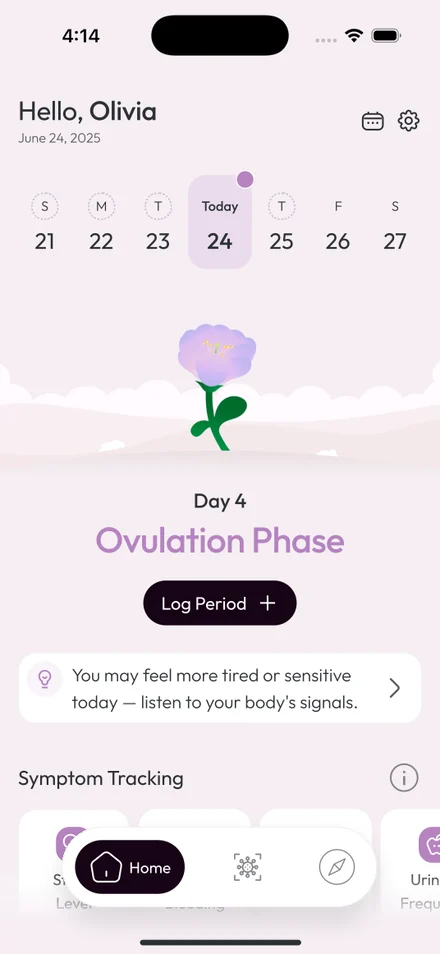
Your care doesn’t stop at the clinic door.
Nuvo Physio runs on Elle Santé — the women’s health platform we built right here. Your plan, your progress and your care team stay with you between visits, not just in the room.
Early access · iPhone and Android