Why do I have pain when I did not injure myself?
By Jennifer Nwankwo · Updated June 2, 2026

One of the most common questions we hear at Nuvo Physio is also one of the most unsettling: “Why do I have pain when I didn’t injure myself?” You didn’t fall, you didn’t lift anything heavy, you didn’t twist an ankle on the stairs — and yet your lower back aches, your shoulder is tight, or something in your pelvis feels off. It can be genuinely confusing, and a little frightening, to hurt without an obvious cause.
The reassuring truth is that pain without a clear injury is extremely common, it is usually explainable, and in most cases it responds very well to the right care. As a physiotherapy and pelvic-health clinic for women in Montreal, we spend a lot of time helping people make sense of pain that seems to come from nowhere. Here is how we think about it.
Pain is not the same thing as damage
It is natural to assume that pain means something is broken or torn. But pain and tissue damage are not the same thing. Pain is your nervous system’s alarm — a protective signal that says, in effect, “pay attention to this part of the body.” Sometimes that alarm fires because there really is an injury. Very often, though, it fires for other reasons entirely.
Think of pain less as a damage meter and more as a smoke detector. A good smoke detector warns you early, sometimes even when there is only a little smoke and no real fire. Your pain system works the same way: it is sensitive on purpose, because its job is to keep you safe. Understanding this is the first step toward stopping the fear that so often makes pain worse.
How everyday habits create pain over time
If you have not had a traumatic event — a broken wrist from a slip, a sprained ankle, whiplash from a car accident — then the likeliest source of your pain is the way you use your body day after day. We move through our routines without a thought for how we are performing them: how we sit, how we stand, how we lift the laundry basket, how we hold a baby on one hip, how we hunch over a phone or a laptop.
Over time, these repeated patterns build up tensions and muscular imbalances. Some muscles become chronically overworked and tight; others switch off and become weak. The body quietly adapts — until one day the load finally tips over a threshold and you feel pain that seems to appear out of nowhere. In our practice, these gradual pains show up most often in the lower back and the shoulders, and frequently in the pelvic floor, which is just another group of muscles that responds to posture, breathing, and stress.
Why the lower back and pelvis are so often involved
Your lower back, hips, abdomen, and pelvic floor work as one connected system — a kind of internal core. When one part of that system is overloaded or not pulling its weight, the others compensate. That is why someone with bladder-control issues may also notice low-back tension, or why long-standing pelvic tightness can contribute to chronic pelvic pain with no clear injury behind it. The body rarely keeps its problems in one tidy box.
When the alarm gets too sensitive
The real problem with pain is not that it appears — it is when pain lingers far longer than it should. When pain hangs around for weeks and months, the nervous system itself can become more sensitive, a process clinicians call central sensitization. In plain terms, the volume dial on your pain system gets turned up, so that ordinary movements or light pressure start to register as painful even when there is no ongoing damage.
This is not “all in your head,” and it is not a sign of weakness. It is a real, physical change in how your body processes signals — and, importantly, it can be turned back down. Movement, education, graded loading, breathing, and addressing the original imbalances all help recalibrate an oversensitive system. This is a core part of how we approach persistent pain and central sensitization at Nuvo Physio.
Stress, sleep, and the rest of your life count too
Pain doesn’t live in your muscles alone — it lives in the whole person. Poor sleep, a stretch of high stress, an overloaded schedule, or a recent life upheaval can all lower the threshold at which your nervous system sounds the alarm. This is one reason the same desk setup or the same long day can feel fine one week and painful the next. Nothing has changed in the tissue; what has changed is your overall capacity to absorb load.
For women, hormonal shifts across the monthly cycle, pregnancy, the postpartum period, and perimenopause and menopause can also influence how tissues feel and how readily pain shows up. None of this means the pain is imaginary or that you are doing something wrong. It simply means that managing pain well often involves looking beyond the sore spot — at sleep, stress, breathing, and recovery — alongside the targeted hands-on and exercise work.
The good news: you have more control than you think
Here is the encouraging part. In most cases of pain without injury, you have real control over what your body does. The catch is that you usually cannot see your own imbalances — the tight hip, the breath you hold, the shoulder that creeps up toward your ear all day. That is exactly what a physiotherapist is trained to spot.
Once those patterns are brought to your attention and addressed, your musculoskeletal system can start working efficiently again. Strength returns to the muscles that had switched off, tension releases in the ones that were overworking, and the “random” pain that seemed to come from nowhere often fades — and stops coming back.
What a thoughtful assessment looks like
- A conversation about your history, your routines, and what makes the pain better or worse — not just where it hurts.
- A hands-on and movement-based assessment of posture, joint mobility, strength, breathing, and, where relevant, the pelvic floor.
- A clear explanation of what we find, in language that makes sense to you.
- A personalized plan combining manual therapy, targeted exercise, and small habit changes you can fold into daily life.
Prevention beats cure
Most people don’t think they have a problem until the pain strikes. But by the time it strikes, the imbalance has usually been building for a long time — and the longer pain lingers, the more involved the road back can become. Prevention is genuinely better than cure, because a cure can sometimes be complex and more invasive than the small, early adjustments that would have headed it off.
This is why we are such believers in regular physiotherapy check-ins, the same way you would see a dentist before a small cavity becomes a root canal. A periodic check-up lets us catch muscular imbalances early, while they are still easy to change, long before they announce themselves as pain. If you have aches you can’t explain — or simply want to stay ahead of them — we would love to help; you can book an appointment with us before the pain strikes.
If there is one idea to take away, it is this: pain that arrives without an injury is your body asking for attention, not announcing that it is broken. With the right guidance, the great majority of these aches can be understood, eased, and prevented from returning — so you can move through your days without bracing for the next twinge.
Frequently asked questions
Can I really have pain without any injury?
Yes, and it is very common. Pain is a protective signal from your nervous system, not a direct measure of damage. Gradual muscular imbalances from everyday postures and habits can build up until they cause real pain, even when nothing was ever injured.
Why does my pain seem to come from nowhere?
Usually it isn’t truly sudden — it has been building quietly for months or years through repeated movement patterns and tension. The pain only becomes noticeable once the cumulative load crosses a threshold. A physiotherapist can trace the pattern back to its source.
Should I rest until the pain goes away?
Complete rest is rarely the answer for pain that wasn’t caused by an injury. Gentle, graded movement usually helps more than total rest, because it restores strength and balance and helps calm an oversensitive nervous system. We will guide you on the right amount and type of activity for your situation.
When should I see a physiotherapist?
If pain lasts more than a couple of weeks, keeps returning, or limits your daily activities, it is worth an assessment. You do not have to wait for things to get bad — a preventive check-up while you feel fine is one of the best ways to avoid future pain.
How long does it take to feel better?
It depends on how long the pain has been present and what is driving it. Many people notice meaningful improvement within a few weeks of starting the right plan, while long-standing or sensitized pain can take longer. Consistency with your home program makes a real difference.
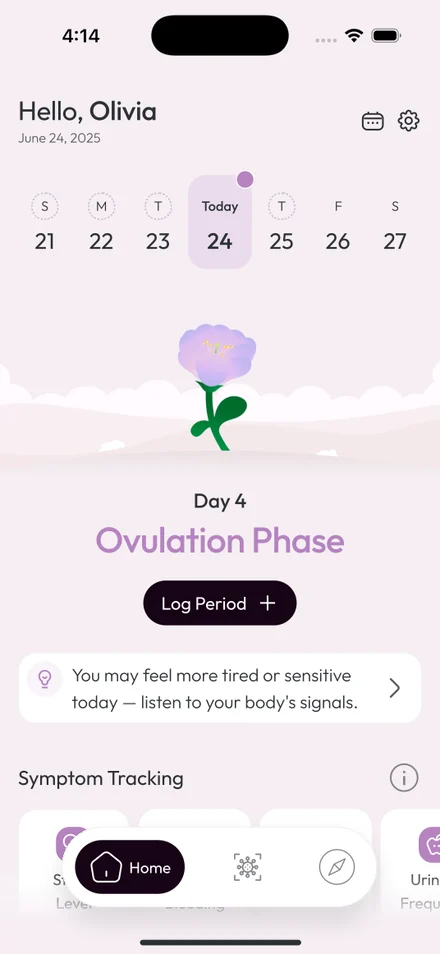
Your care doesn’t stop at the clinic door.
Nuvo Physio runs on Elle Santé — the women’s health platform we built right here. Your plan, your progress and your care team stay with you between visits, not just in the room.
Early access · iPhone and Android