Occupational Therapy’s Role in Women’s Health Promotion
By Nuvo Physio · Updated June 2, 2026
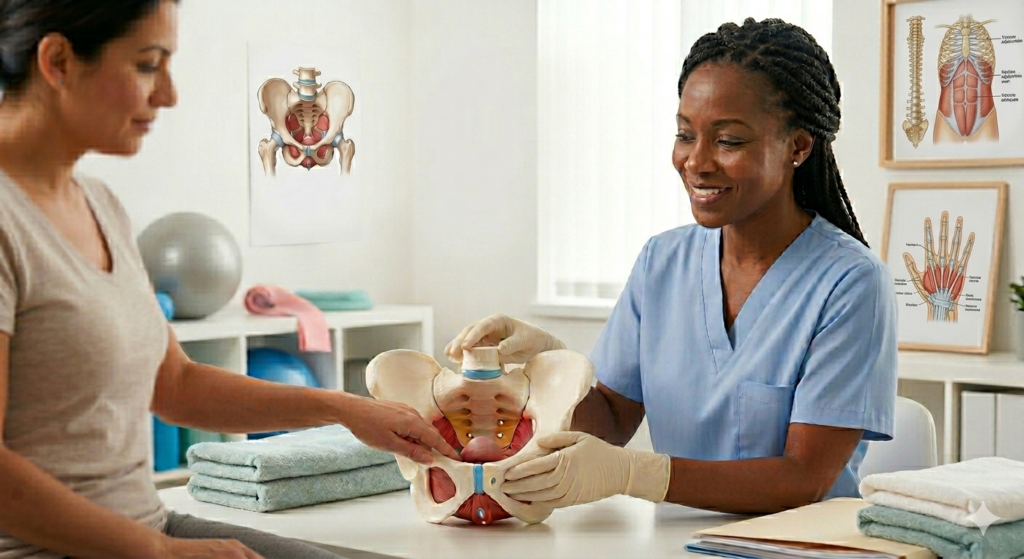
Ask most people what occupational therapy is, and you will get a puzzled look. Tell them you use it to support women through pregnancy and the postpartum period, and the surprise only grows: “Wait, occupational therapists can do that?” At Nuvo Physio, the answer is a confident yes. Occupational therapy is one of the most versatile and underused pieces of perinatal care, and it has a meaningful role to play in helping new mothers stay functional, comfortable, and confident during one of the most demanding seasons of life.
In this guide, we explain what occupational therapy actually is, why hand and wrist problems are so common in pregnancy and postpartum, and how a multidisciplinary, occupation-focused approach fits into a complete continuum of care for women.
What is occupational therapy, really?
Occupational therapy helps people do the things they need and want to do every day. In this context, an “occupation” is not a job — it is any meaningful activity that fills your day, from feeding and lifting your baby to sleeping, dressing, working, and moving through your home. When pain, fatigue, or a physical limitation gets in the way of those activities, an occupational therapist steps in to restore function.
Occupational therapists work across nearly every corner of health care, including mental health, rehabilitation, hand therapy, and increasingly, women’s and perinatal health. The unifying thread is always the same: we look at the whole person and the real-life tasks they are struggling with, then build creative, personalized, evidence-based strategies to make those tasks possible again.
From hand therapy to perinatal care
Many occupational therapists who work in women’s health arrive there through hand therapy. Hand therapy is the art and science of rehabilitating the upper limb — the hand, wrist, elbow, and shoulder girdle. It blends occupational and physical therapy theory and practice, combining a deep understanding of how the upper limb is built with how it functions in everyday activity.
That expertise turns out to be remarkably relevant to new parents. Therapists who specialize in hand therapy use tailored, evidence-based interventions to treat musculoskeletal conditions of the arms and hands and to optimize function. And as it happens, the postpartum period is full of new, repetitive demands on exactly those structures.
Why hand and wrist pain is so common in pregnancy and postpartum
Musculoskeletal conditions include any injury affecting the joints, muscles, tendons, ligaments, cartilage, and sometimes the nerves. The transition into parenthood can be surprisingly hard on the body, especially because caring for a baby involves so much repetitive hand use — often performed in awkward postures that strain the wrists and forearms.
Think about how many times a day a new parent lifts a baby under the arms, supports a heavy head during feeding, holds a bottle or breast in position, fastens tiny snaps, and pushes a stroller. Multiply those movements across weeks of broken sleep and shifting hormones, and it is easy to see why hand and wrist complaints are so frequent among perinatal women. In one study of 383 pregnant women, 67.4% reported hand and wrist problems.
The conditions we see most often include:
- De Quervain’s tenosynovitis — sometimes called “mommy thumb,” an irritation of the tendons on the thumb side of the wrist, aggravated by repeatedly lifting and supporting a baby.
- Carpal tunnel syndrome — compression of the median nerve at the wrist, which can flare in pregnancy with fluid retention and continue postpartum.
- Cubital tunnel syndrome — compression of the ulnar nerve at the elbow, often linked to sustained bent-elbow positions during feeding.
None of these are inevitable, and most respond well to early, targeted care. Treatment might combine a custom or off-the-shelf splint to rest the irritated tendons, hands-on techniques to ease tension, graded exercises to rebuild tolerance, and — crucially — coaching on how to change the movements that keep flaring the problem. Left unaddressed, a minor ache can settle into a persistent issue that makes feeding and carrying your baby genuinely painful, so it is well worth paying attention to early. We explore practical strategies for managing these aches in our companion article on navigating hand pain in pregnancy and postpartum.
What else can occupational therapy offer new mothers?
Hand and wrist care is only one piece of the picture. The broader goal of occupational therapy in the perinatal period is to empower women to engage in the activities that matter to them and to maintain functional independence while caring for a newborn. The arrival of a baby brings dynamic, sometimes overwhelming life changes, and occupational therapists are well equipped to help women navigate them.
Functional mobility and pain prevention
We assess how you actually move through your day and look for adjustments that protect your joints and tissues. Small ergonomic changes — how you position your baby for feeding, how you lift from the crib, how you set up a changing station — can dramatically reduce strain and prevent pain before it starts.
Fatigue management and sleep hygiene
Exhaustion is one of the defining experiences of early parenthood. Occupational therapists offer concrete fatigue-management and sleep-hygiene strategies that help you conserve energy, pace demanding tasks, and protect what limited rest you can get — all of which support both physical recovery and mental well-being.
Ergonomics of mothering tasks
From baby-wearing to stroller setup to pumping at a workstation, the everyday mechanics of caring for an infant can either protect your body or quietly wear it down. We coach you through the ergonomics of these repeated tasks — adjusting heights, supporting your back and arms, alternating positions, and using cushions or carriers wisely — so the daily grind of new parenthood does not turn into a chronic injury.
Adaptive strategies and assistive tools
Sometimes the most powerful intervention is the simplest one. An occupational therapist can recommend a supportive wrist splint, suggest a different way to hold or lift your baby, or introduce a small piece of equipment that takes the load off an irritated joint. We also help you re-sequence your day so demanding tasks are spread out rather than stacked together, which protects both your tissues and your energy. The goal is never to do less of what you love — it is to do it in a way your body can sustain.
A continuum of care for women
The benefits of occupational therapy are still not widely understood in obstetrics and gynecology, so referrals for pregnancy and postpartum rehabilitation remain less common than they should be. Yet occupational therapists are ideally positioned to support women’s health across the perinatal period, working alongside physiotherapists and other professionals.
This is exactly why a multidisciplinary approach matters. When pelvic-floor physiotherapy, occupational therapy, and other disciplines work in concert, women receive a true continuum of care rather than fragmented, one-problem-at-a-time treatment. Occupational therapy complements the pelvic and core rehabilitation many women need during the fourth trimester, supports those preparing for the demands of pregnancy and birth, and addresses the upper-body and lifestyle pieces that pelvic care alone does not cover.
If you are pregnant or newly postpartum and wrestling with wrist pain, fatigue, or the sheer physical load of caring for a baby, you do not have to push through it alone. Reach out to our team to learn how occupational therapy and our wider perinatal care can support you.
Frequently asked questions
What is the difference between occupational therapy and physiotherapy?
Both restore movement and function, but with different lenses. Physiotherapy tends to focus on the underlying physical impairment — strength, range of motion, and tissue healing. Occupational therapy focuses on the meaningful activities you need to do and adapts the task, the environment, or your strategy so you can do them. In perinatal care the two overlap and complement each other, which is why we often work as a team.
Why do my hands and wrists hurt so much since having my baby?
Caring for a newborn involves constant, repetitive lifting, holding, and gripping, often in awkward positions and on very little sleep. Combined with the hormonal and fluid shifts of pregnancy and postpartum, this commonly leads to conditions like De Quervain’s tenosynovitis (“mommy thumb”) and carpal tunnel syndrome. The good news is that targeted care, activity modification, and ergonomic adjustments usually bring meaningful relief.
Do I need a doctor’s referral to see an occupational therapist?
In most cases you can book directly without a physician’s referral, though some insurance plans may require one for reimbursement. We are happy to help you understand the process when you contact us.
When should I seek help for postpartum hand or wrist pain?
The earlier the better. If pain is interfering with feeding, lifting, or caring for your baby — or if you notice numbness, tingling, or weakness — it is worth getting assessed rather than waiting it out. Early intervention often prevents a manageable irritation from becoming a stubborn, chronic problem.
Can occupational therapy help with more than physical pain?
Yes. Occupational therapists also address fatigue management, sleep strategies, energy conservation, and adapting daily routines, all of which support both physical recovery and emotional well-being during a demanding period of life.
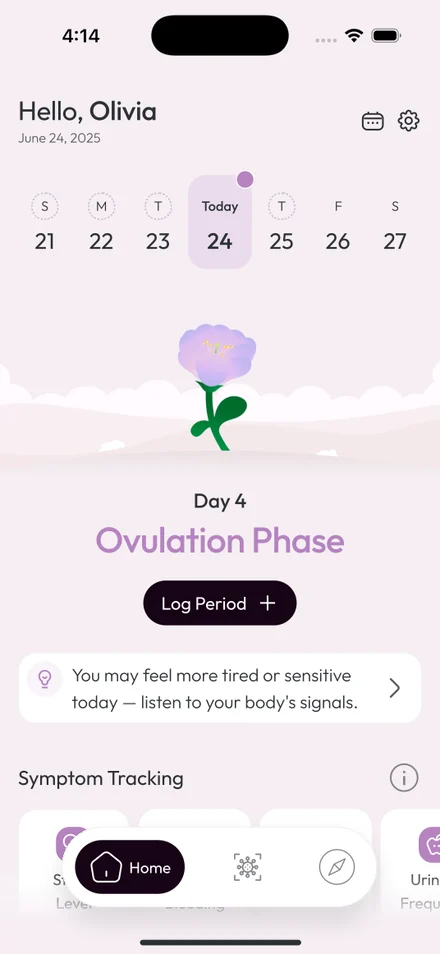
Your care doesn’t stop at the clinic door.
Nuvo Physio runs on Elle Santé — the women’s health platform we built right here. Your plan, your progress and your care team stay with you between visits, not just in the room.
Early access · iPhone and Android