The rule of thumb: Navigating hand pain in pregnancy and postpartum
By Nuvo Physio · Updated June 2, 2026
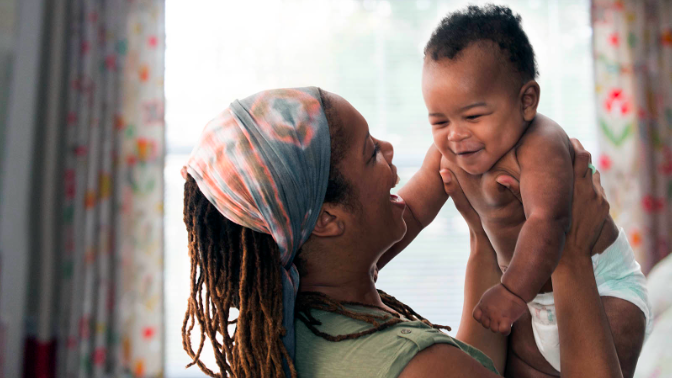
If your thumb and wrist have started aching since you became pregnant or welcomed your baby, you are not imagining it, and you are far from alone. At Nuvo Physio, our Montreal clinic regularly meets new parents whose hands hurt every time they lift, cradle, or feed their little one. That nagging pain on the thumb side of the wrist often has a name: De Quervain’s tenosynovitis, sometimes nicknamed mommy’s thumb or mommy’s wrist.
The good news is that this is a well-understood, very treatable condition. With a few thoughtful adjustments to how you move, hold, and rest your hands, most people see real relief. Here is what is happening, why pregnancy and the postpartum period make your hands more vulnerable, and what actually helps.
Why pregnancy and postpartum change your body
The transition to parenthood is one of the most dynamic periods a body ever goes through. The perinatal period, which spans pregnancy and roughly the first year after birth, brings hormonal shifts, weight changes, mood fluctuations, and altered blood circulation. Your whole system is adapting at once.
A key player is the hormone relaxin, which your body produces in higher quantities during pregnancy. Relaxin softens and loosens ligaments to help prepare the pelvis for childbirth. But it does not act on the pelvis alone. Higher relaxin levels increase flexibility and mobility in joints, muscles, and ligaments throughout the body, and that effect can linger well into the postpartum months.
Greater joint mobility sounds harmless, but it also means your joints are temporarily less stable and more susceptible to strain. That is why it is worth being a little cautious with repetitive or awkward movements during this window, especially the constant lifting, carrying, and feeding that come with a newborn. The same caution that protects your back and your pelvic floor applies to your wrists and thumbs too.
What is De Quervain’s tenosynovitis?
If you want the geeky deep dive: De Quervain’s tenosynovitis involves two tendons on the thumb side of the wrist, the abductor pollicis longus (APL) and the extensor pollicis brevis (EPB). Tendons are strong, fibrous connective tissues that anchor muscle to bone, allowing your skeleton to move and stay stable. These particular tendons run through a snug sheath, and they are responsible for straightening the thumb and moving it away from the palm.
When those tendons become inflamed, they can no longer glide smoothly through their sheath. Instead they rub and catch, which produces pain, inflammation, and swelling. The frustrating part is that the movement these tendons control, lifting the thumb away from the hand, is one you use constantly when you parent: scooping up your baby, supporting a feeding, twisting open a jar of purée.
It is worth saying clearly that this is not a sign you are doing anything wrong. Your hands are simply handling an enormous new workload at the very moment hormones have made the surrounding ligaments more lax. A newborn might be fed eight to twelve times a day, and each feed, lift, and transfer asks the thumb tendons to work in exactly the same direction, over and over. The condition is mechanical and common, and it responds well to the right adjustments rather than to powering through the pain. Catching it early, while the irritation is still mild, almost always makes the path back to comfort shorter and smoother.
What causes it?
The exact underlying cause is not fully understood, but the symptoms are clearly triggered by repetitive thumb and wrist movements. Common culprits include:
- Lifting a baby or toddler under the arms with the wrists doing most of the work
- Repeatedly opening containers, jars, and tight bottles
- Using the thumb constantly to text and scroll on a phone, often one-handed while feeding
Because the hormonal softening of pregnancy and the sheer volume of repetitive lifting overlap, De Quervain’s is one of the most frequently observed upper-limb conditions among pregnant people and caregivers of young children.
What are the symptoms?
De Quervain’s tends to announce itself in a few recognizable ways:
- Swelling at the base of the thumb
- Painful popping or catching when you pull, lift, or open containers
- A small raised nodule in the thumb area
- Pain with gripping or pinching
- Tenderness to the touch, sometimes with a burning sensation, that worsens with movement
If these sound familiar, it is worth having them assessed rather than pushing through. Pain that limits how you care for your baby deserves attention, not stoicism.
How is it diagnosed?
Diagnosis is usually straightforward and hands-on:
- A primary care provider, specialized physician, occupational therapist, or hand therapist can use provocative tests, specific physical examination maneuvers that reproduce or exacerbate symptoms to confirm the condition.
- X-ray imaging is not usually needed, but it can be used to rule out other conditions.
- Ultrasound can produce images to support the diagnosis when needed.
In most cases, a careful history and a couple of physical tests are enough to identify De Quervain’s without any imaging at all.
How we treat and manage it
Treatment aims to reduce pain and inflammation while restoring comfortable, functional use of your hand and thumb. It almost always starts with practical, low-tech strategies you can begin today.
Activity modification
Activity modification simply means adjusting your daily movements to protect the irritated tendons while they calm down. A few high-impact changes:
- Rethink how you lift your baby. Avoid the position where the wrist bends toward the thumb side with the thumb stretched away from the palm. Instead, lift with one hand under your baby’s bottom and the other supporting their back and neck, keeping your thumbs tucked close to the palm. Using the whole hand for support spreads the load off the thumbs.
- Mind your hands while feeding. Whether you breastfeed or bottle-feed, keep your thumbs close to the palm (almost glued to the index finger) as you cradle your baby’s head, and avoid bending the wrist sharply forward or backward for long stretches.
- Limit repetitive gripping and pinching on the sore side, such as prying open diaper tabs or tight bottle lids. Delegate these to a partner when you can.
Support, rest, and medical options
- Splints or custom orthoses can hold the thumb and wrist in a neutral position, giving the tendons support during activities that would otherwise aggravate them.
- Stretching and rest for the thumb and wrist promote tendon healing. Consider handing off strenuous tasks to family and friends so your hands get genuine breaks.
- Corticosteroid injections and anti-inflammatory medication may be prescribed by a physician to reduce stubborn inflammation.
An occupational or hand therapist can tailor these strategies to your daily routine, fit an orthosis correctly, and guide a graded return to comfortable gripping. This is the same whole-body, function-first approach we bring to postpartum recovery and to the joint and ligament strain many people feel during pregnancy-related pelvic girdle pain.
Preventing hand pain while caring for your newborn
You cannot pause parenting to rest your hands, but you can change how you do it. The core principles are ergonomic: keep your wrists as neutral as possible, recruit your whole hand and forearm rather than just the thumb, and break up long repetitive tasks. Alternate which arm carries the car seat, bring your baby to the breast or bottle rather than hunching your wrist toward them, and prop pillows to take the weight during feeds.
It also helps to think about your hands the way we think about the pelvic floor in the fourth trimester: the postpartum body is healing and rebuilding capacity, so load it gradually and respect early warning signs. If symptoms persist despite these adjustments, please consult your primary care provider and an occupational therapist. You can also reach out to our team to talk through what you are feeling and build a plan that fits your real days.
Frequently asked questions
Will mommy’s thumb go away on its own after pregnancy?
For some people it eases as hormone levels normalize and the heaviest lifting decreases, but it often persists when the repetitive loading continues, which it usually does with a baby. Early activity modification, rest, and support typically speed recovery and prevent the pain from becoming chronic.
Can I still breastfeed if I have De Quervain’s?
Yes. The goal is to change how you position your hands, not to stop feeding. Keeping your thumb close to the palm, using pillows to support your baby’s weight, and avoiding sharp wrist bending during long feeds can dramatically reduce the strain.
Is it safe to wear a thumb splint while caring for my baby?
A well-fitted splint or custom orthosis is a mainstay of treatment and is safe to wear during daily activities. It holds the thumb and wrist in a neutral, protected position. A hand therapist can recommend the right style and fit so it supports you without getting in the way.
When should I see a professional about hand pain?
If your pain limits how you lift, carry, or feed your baby, if you notice swelling or a nodule at the base of the thumb, or if symptoms persist despite resting and adjusting your activities, it is time to have it assessed. Early care is simpler and more effective than waiting until the tendons are badly inflamed.
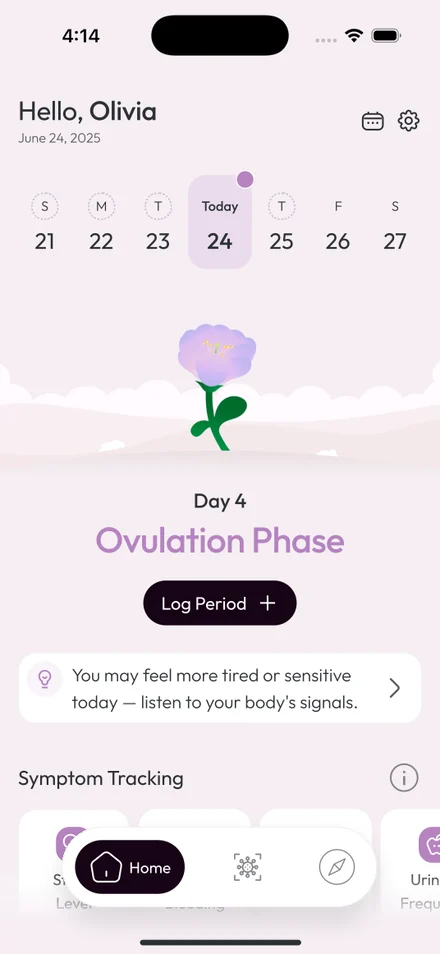
Your care doesn’t stop at the clinic door.
Nuvo Physio runs on Elle Santé — the women’s health platform we built right here. Your plan, your progress and your care team stay with you between visits, not just in the room.
Early access · iPhone and Android