Pregnancy Pelvic Girdle Pain
Evidence-based physiotherapy to ease pain at the front and sides of your pelvis so you can move through pregnancy with more comfort and confidence.

You’re not imagining this. What you’re experiencing is real.

Why pelvic girdle pain can feel overwhelming
Understanding the physical and emotional impact of pregnancy-related PGP
Pelvic girdle pain affects up to 1 in 5 pregnant individuals, yet many suffer in isolation, believing they should simply “push through” pregnancy discomfort. But PGP — pain at the symphysis pubis (front of the pelvis), sacroiliac joints (sides), or both — is a real, biomechanical problem with identifiable causes and highly effective treatments. The pain is not weakness, nor is it inevitable. It’s your body signaling that your pelvic joints and muscles need support.
What makes pregnancy-related PGP so challenging is that it affects everything: walking becomes painful, stairs become a negotiation, rolling over in bed jolts you awake, and standing on one leg (like getting dressed) becomes nearly impossible. The emotional weight of losing mobility during a time when you’re supposed to feel joyful can be significant. Many pregnant people fear that PGP means their body is broken or that it will prevent them from having the birth they want. The truth is different — with the right support, pain improves dramatically, and you can move through the rest of your pregnancy with genuine relief and renewed confidence.

How pregnancy changes the pelvis
Understanding hormonal, biomechanical, and joint factors that drive pelvic girdle pain
During pregnancy, your body releases relaxin — a hormone that softens ligaments throughout your pelvis to allow for expansion and birth. While this is essential for labor, it also means your pelvic joints become more mobile and less stable. Add the weight of your growing baby, a shifting center of gravity, and changes to your muscle recruitment patterns, and your pelvis is working harder than ever before. Without proper support and awareness, the joints begin to move in ways they shouldn’t — the sacroiliac joints become hypermobile and irritated, the symphysis pubis experiences shearing forces, and muscles around the hips and pelvis tense up trying to stabilize what the ligaments can no longer control.
This isn’t a problem with the baby or with pregnancy itself — it’s a matter of pelvic mechanics. Your pelvis needs reinforcement through targeted exercises, alignment strategies, and support tools. Many people also develop protective muscle tension in response to pain, which can amplify discomfort if not addressed. The good news is that pelvic physiotherapy can optimize your alignment, strengthen the right muscles in the right way, release excessive tension, and provide strategic support — allowing your pelvis to handle pregnancy’s demands with significantly less pain.
Why physiotherapy can help with pelvic girdle pain in pregnancy
Physiotherapy is uniquely positioned to address pregnancy-related pelvic girdle pain because it works with your body’s changing biomechanics rather than against them. Evidence shows that structured physiotherapy reduces pain, improves function, and enhances your confidence moving through the rest of pregnancy and into labor. Here’s what pelvic floor physiotherapy can do for you.
Pelvic girdle pain physiotherapy focuses on:
- Pelvic alignment and joint optimization — Assessing how your pelvis is moving and positioning and providing corrective strategies to reduce excessive motion at the symphysis pubis and sacroiliac joints.
- Targeted muscle strengthening — Building endurance and strength in your gluteal muscles, hip stabilizers, and deep pelvic core to provide active support for your pelvis during pregnancy.
- Release of protective muscle tension — Using manual therapy and self-release techniques to ease the guarding and tightness that develops in response to pelvic pain and instability.
- Support strategies and activity modification — Guidance on positioning, lifting, walking, and daily movement patterns that protect your pelvis; recommendation and fitting of support belts when appropriate.

How pelvic girdle pain care works at Nuvo Physio
Pregnancy-focused care that evolves with your body.
Care begins with a detailed assessment of your pain patterns, movement quality, pelvic alignment, and how your body responds to different positions and activities. We understand that pregnancy is a moving target — what works in your first trimester may need adjustment in your third. Your care plan evolves as your pregnancy progresses, always with the goal of keeping you mobile, comfortable, and prepared for birth.
Your care may involve:
- Pregnancy-Specific Pelvic Physiotherapy — Specialized assessment and treatment designed for the unique biomechanics of pregnancy, including manual therapy, joint mobilization, and stabilization exercises safe for each trimester.
- Collaborative Team Care — At Nuvo, we don’t just assign a therapist; we assign a team. We match you with the most appropriate clinician(s) based on your current phase of care — whether you need initial pain relief in early pregnancy or advanced stability training in your third trimester — to ensure the best fit for your recovery.
- Education and Positioning Strategies — Practical tools for sleeping, moving, getting dressed, and managing daily activities; detailed guidance on safe exercises and movement patterns; support belt fitting and instruction.
- Birth Preparation Support — As you approach labor, we refine your strategy, address lingering concerns, and help you prepare your body and mind for birth in the presence of pelvic pain, so you feel more confident and in control.
Common pelvic girdle pain symptoms we support
Pelvic girdle pain presents differently for each pregnant person. We provide specialized support across the full range of symptoms and movement limitations. If you recognize yourself in any of these, physiotherapy can help.
- Pain at the front of the pelvis (symphysis pubis) — Aching, sharp, or grinding pain directly above the pubic bone, often worse with walking or climbing stairs.
- Sacroiliac joint pain (one or both sides) — Deep pain in the lower back or buttock region, often radiating down the leg, worse with standing on one leg or changing positions.
- Pain with specific movements — Difficulty climbing stairs, rolling over in bed, getting dressed, or standing on one leg without sharp or radiating pain.
- Clicking or grinding in the pelvis — Audible or felt snapping, clunking, or grinding sensations when moving, walking, or changing positions.
- Pain that radiates into the thigh or groin — Pain that starts in the pelvic joints and travels down the inner thigh or along the groin region.
- Instability or “giving way” sensation — Feeling like your pelvis isn’t stable, or that your leg might give out when walking or standing.
- Pain that wakes you at night or with positional changes — Discomfort triggered by rolling over in bed, getting up to use the bathroom, or changing sleeping positions.
What to expect when you start care
- “Tell us what you’re feeling” — Share details about where your pain is, when it occurs, which movements trigger it, and how it’s affecting your daily life and sleep.
- “Get the right support” — We use your information to design a plan that addresses your specific pain patterns and pregnancy stage, and introduce you to the clinician best suited to your needs.
- “Begin care at your pace” — Treatment evolves as your pregnancy progresses. We adjust strategies regularly, teach you self-management tools, and prepare you for the next phase of pregnancy and beyond.
Pregnancy pelvic girdle pain FAQs
When should I start physiotherapy if I have pelvic girdle pain?
Is it safe to do exercises during pregnancy if I have pelvic girdle pain?
Will pelvic girdle pain affect my labor?
Can I use a support belt throughout my pregnancy?
What happens after delivery? Will the pain go away?
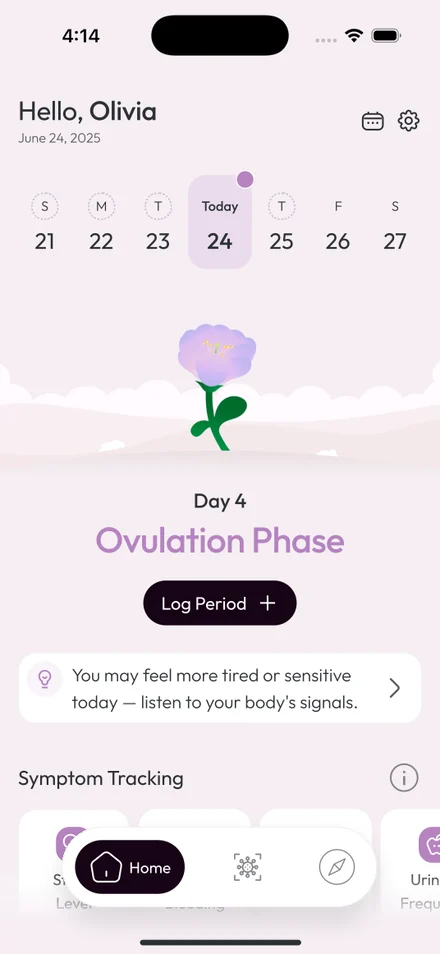
Your care doesn’t stop at the clinic door.
Nuvo Physio runs on Elle Santé — the women’s health platform we built right here. Your plan, your progress and your care team stay with you between visits, not just in the room.
Early access · iPhone and Android